
If you fly online on VATSIM or IVAO, event times are almost always given in 'Z', as in 18:00Z. Here's what Zulu time is, and why it's easy for UK simmers right now.
What is Zulu time?
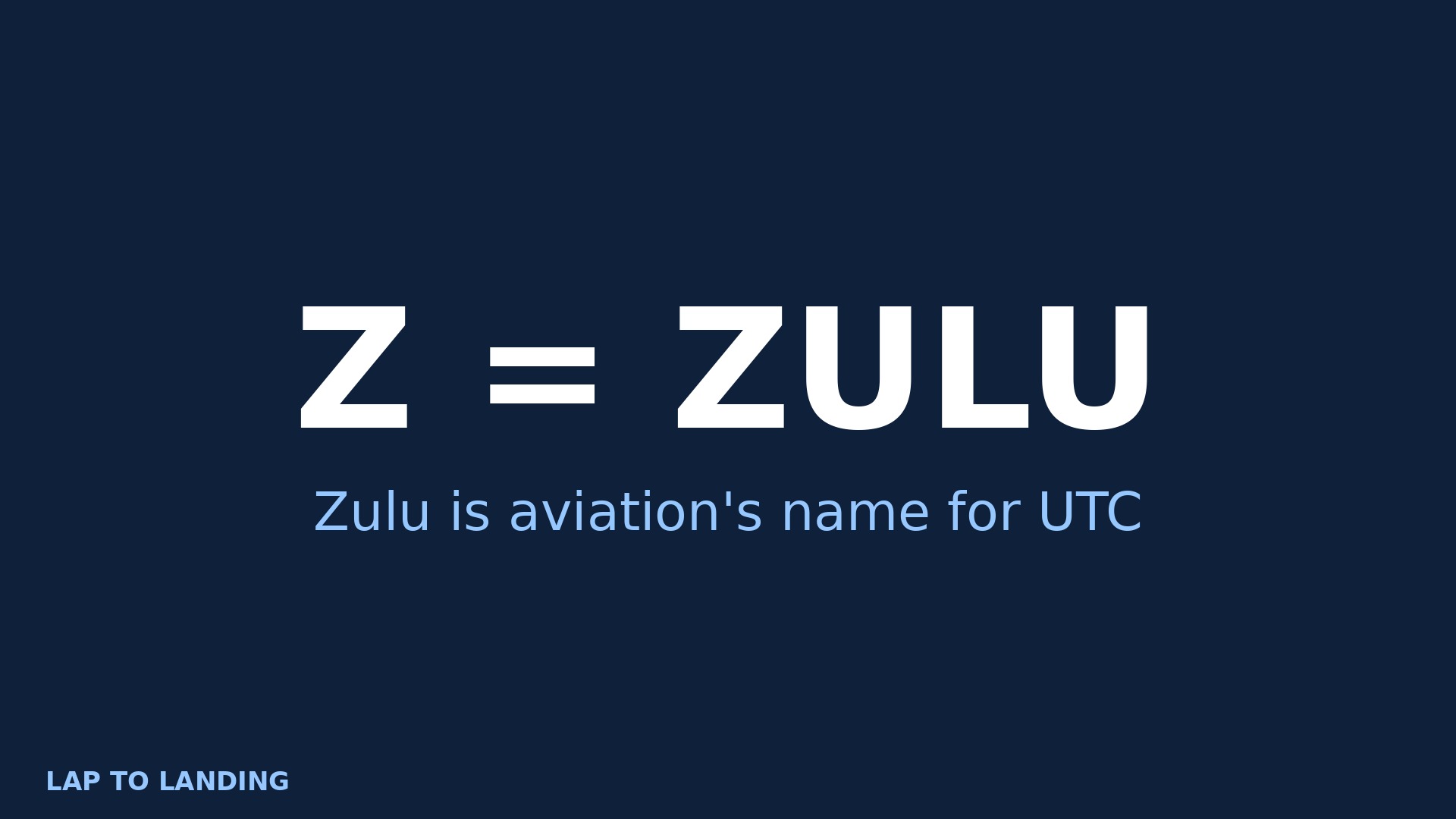
Zulu time is Coordinated Universal Time (UTC). Skybrary describes UTC as "a single time standard for global aviation based upon the time at 0 degrees East/West (the Greenwich Meridian)".
It's called Zulu because Z is Zulu in the aviation phonetic alphabet. The FAA's Aeronautical Information Manual says: "FAA uses Coordinated Universal Time (UTC) for all operations. The word 'local' or the time zone equivalent must be used to denote local when local time is given during radio and telephone communications. The term 'Zulu' may be used to denote UTC."
Why aviation uses it
Flights cross time zones, so using one clock everywhere means pilots, controllers and flight plans all mean the same moment when they say a time. That's why online networks list events in Zulu too.
UK time and Zulu time
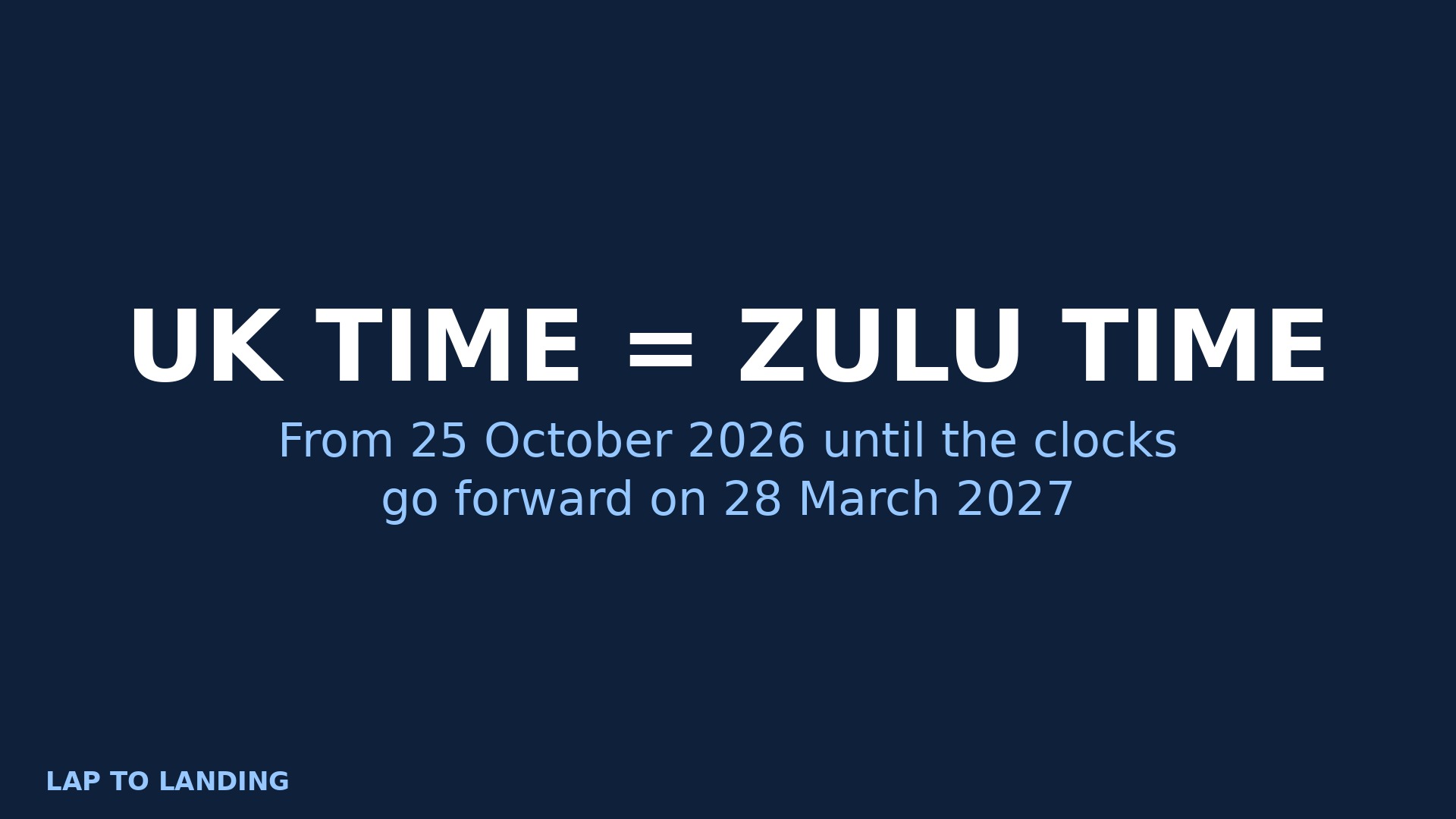
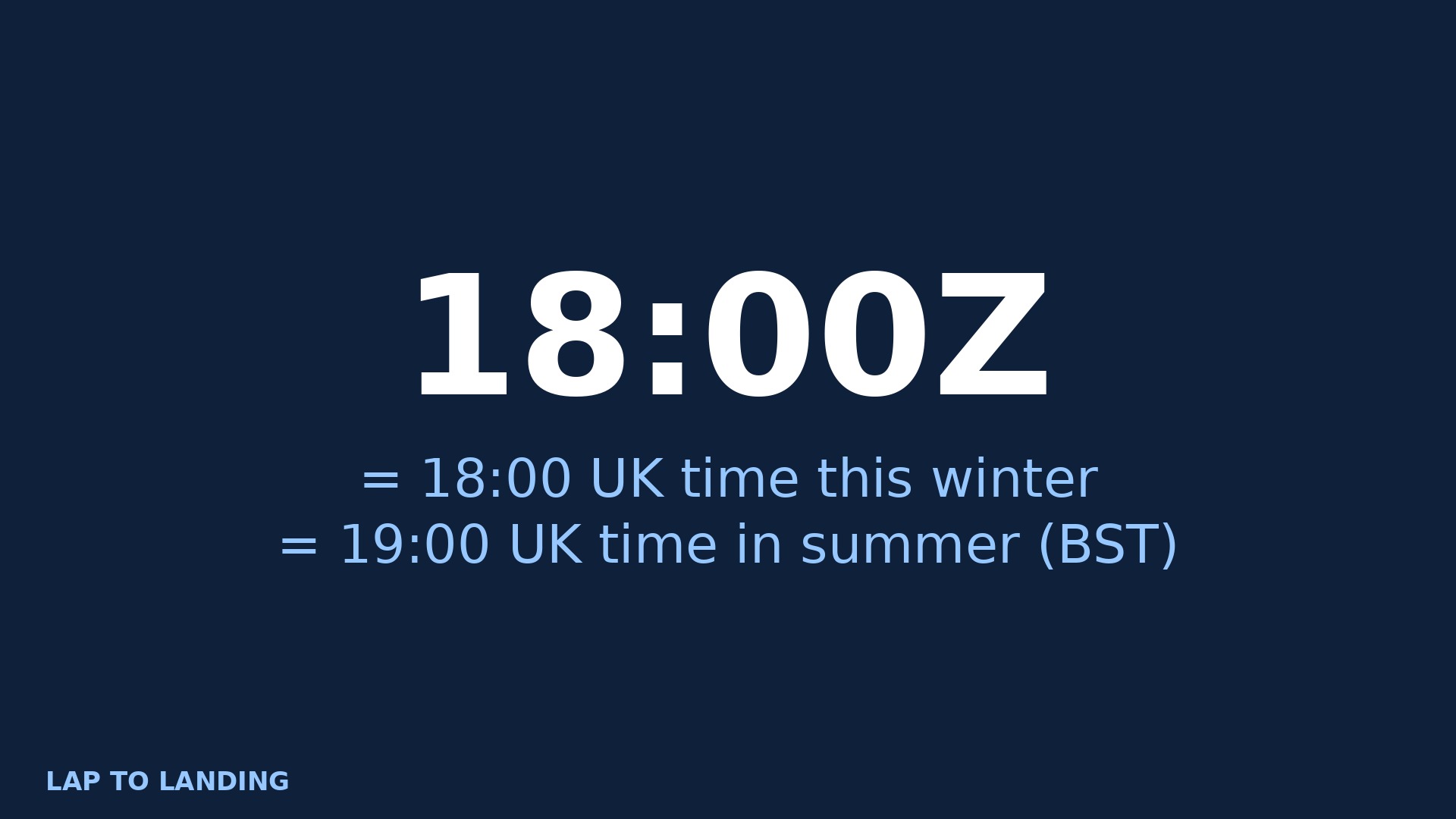
UK clocks went back on Sunday 25 October, so the UK is on GMT. Until the clocks go forward on 28 March 2027, UK time and Zulu time are the same on the clock: an event at 18:00Z starts at 18:00 UK time.
In summer, when the UK is on British Summer Time, add an hour. The same 18:00Z event would start at 19:00 UK time.
Quick tips
- Look for the Z: 1800z, 18:00Z and 18:00 UTC all mean the same time.
- If a time says 'local', it's the airport's local time, not Zulu.
- When the clocks change, re-check any event you've saved.
Sources: Skybrary (https://skybrary.aero/articles/coordinated-universal-time-utc); FAA Aeronautical Information Manual, Chapter 4, Section 2 (https://www.faa.gov/air_traffic/publications/atpubs/aim_html/chap4_section_2.html); GOV.UK (https://www.gov.uk/when-do-the-clocks-change).
Images: Lap to Landing.
Watch on TikTok: https://tiktok.com/@laptolanding/video/7700581877471628576
Watch on Instagram: https://www.instagram.com/reel/De6tnLjFWi7/
Watch on YouTube: https://www.youtube.com/shorts/MoCw75O_AV0
Read the full announcement, details and release notes from the original publisher.